
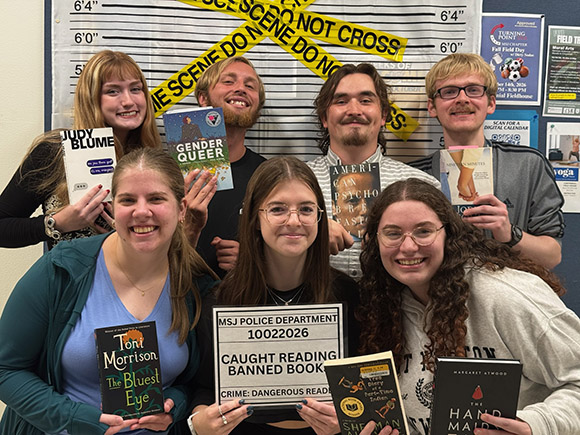
The Mount Community celebrated Banned Books Week Oct. 4-10 with what is becoming an annual tradition, “Get Caught Reading Banned Books with Us!”
MSJ Professor Elizabeth Mason started the event to promote and emphasize the importance of reading books, especially those that are deemed controversial or that are challenged by local organizations or governments.
At the Banned Books event we recruited many people, even those who aren’t avid readers, to join us for a brief photograph with a banned book. I overheard many people say that they would finally get to reading this book, or would give this other book a try. Throughout the two days we were stationed outside the dining hall, we photographed students of many majors, as well as faculty members with their favorite banned books, as a way to help encourage uncensored reading throughout the MSJ campus.
Books are banned or challenged for a number of reasons, usually with the intent to protect young readers from themes and ideas that are deemed too mature. These bans often have the adverse effect; they shelter kids from themes and topics that are wholly relevant and important to a child's development as well as ideas that could be useful for protecting the child as they grow up..
One such book, “Nineteen Minutes” by Jodi Picoult, was banned and challenged over a brief depiction of rape—a painfully difficult and relevant topic. By banning and censoring what issues our children are able to read about we do not protect them from these ideas (especially in the age of the internet), instead we are only making it more difficult for children to process, understand, and protect themselves from similar situations.
“Nineteen Minutes” is a crucial text that helps teach empathy and care for one another. It helps spread : an anti-bullying message that is also especially important in children’s formative years but is overshadowed by a scene that occurs on less than one of its 455 pages. Books like this often contain themes and ideas that are vital for building empathy, critical thinking, and perspective.
I was honored to be a part of our Banned Books Week event again this year, and hope to see it grow for many years to come. Events like this are necessary for educating and pushing back against censorship in a country that champions free speech—and also for just sharing a love for reading. And the next time you hear of a book being challenged, go ahead and give it a read. As they say, you can’t judge a book by its cover.
Photo
Pictured, back row: Maria Wendling holding “Are You There God? It’s Me Margaret,” Alex Taft holding “Gender Queer,” Ethan Geiger holding “American Psycho,” Joey Knizner Holding “Nineteen Minutes”; front row: Sady Hirt holding “The Bluest Eye,” Grace Miller holding “The Absolutely True Diary of a Part-Time Indian,” and Alyssa Meyer holding the graphic adaptation of “The Handmaid’s Tale.”