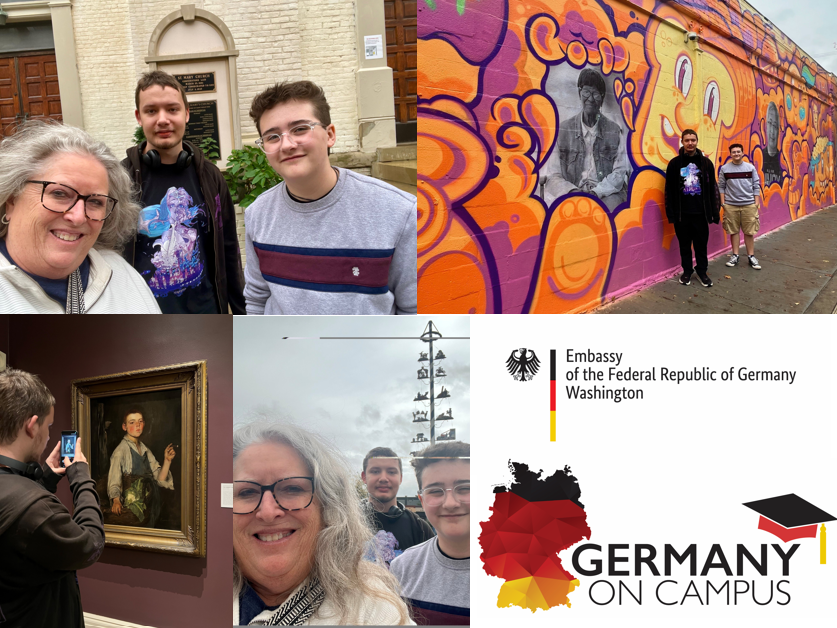
Mount St. Joseph University Art & Design students explore Cincinnati’s German-American heritage through historic landmarks, celebrated artists, and contemporary murals, connecting the city’s artistic past with its creative present.
Mount St. Joseph University Art & Design students recently continued their exploration of Cincinnati’s rich German-American artistic heritage through an experiential learning field trip connecting historic architecture, traditional fine art, and contemporary public murals. Supported by the Germany on Campus grant from the German Embassy, the experience encouraged students to consider how Cincinnati’s artistic past continues to influence the creative identity of the city today.
Exploring German Heritage in Over-the-Rhine
The day began with a historical tour of Old St. Mary’s Church in Cincinnati’s Over-the-Rhine neighborhood, one of the city's most significant German-American cultural landmarks. Founded by German immigrants in the 19th century, Old St. Mary’s reflects the craftsmanship, religious traditions, and architectural influences that helped shape the neighborhood. Students explored how German immigrants contributed to Cincinnati's artistic and cultural development through architecture, decorative arts, and community institutions. The visit provided an opportunity to understand how the visual arts preserve cultural identity and tell the stories of generations.
From Historic Art to Contemporary Murals
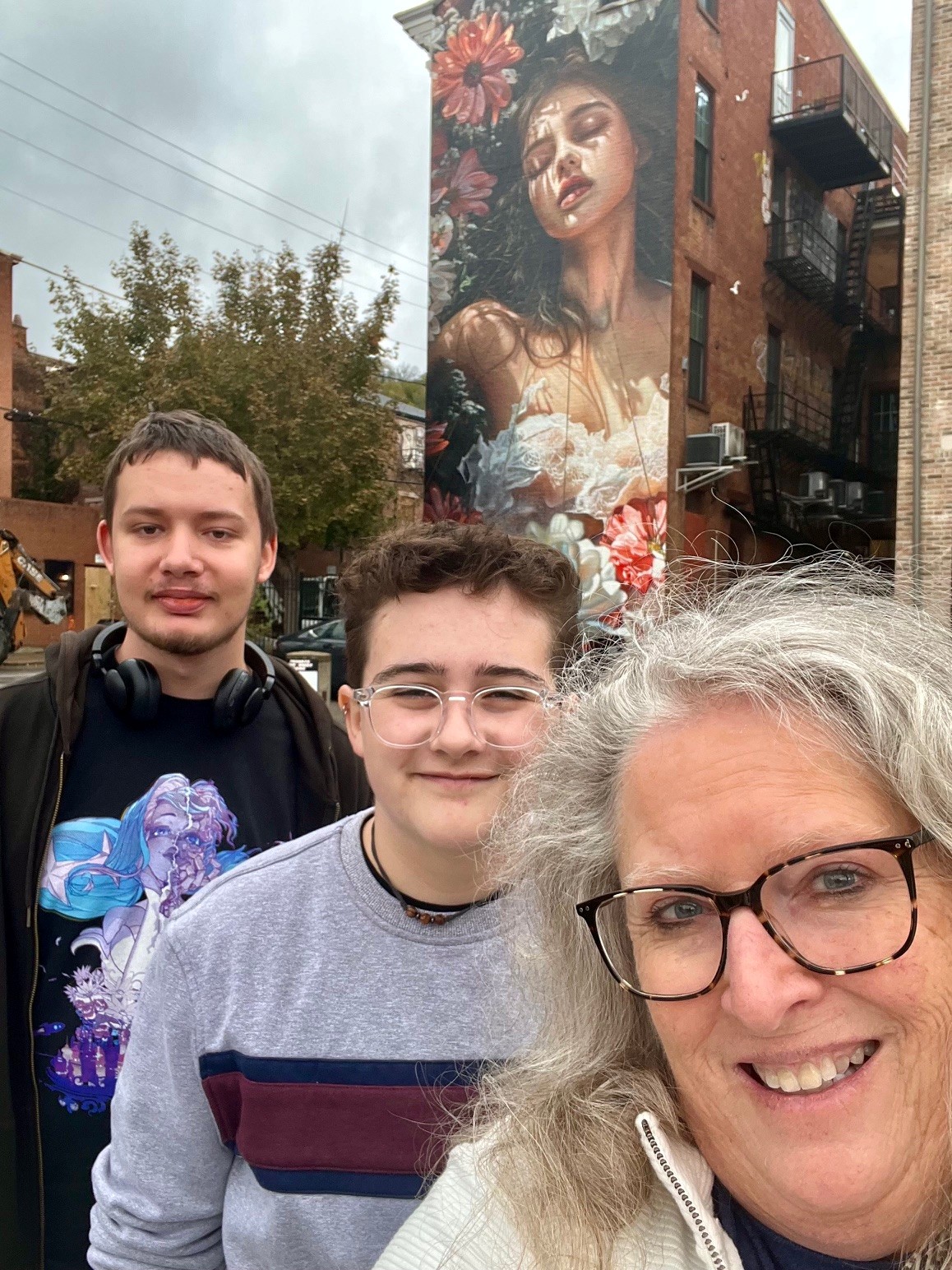
Following the church tour, students explored contemporary murals throughout Over-the-Rhine, examining how today's artists continue the tradition of using public spaces to communicate stories, celebrate communities, and express cultural identity.
The experience built upon an earlier field trip to Cincinnati's Union Terminal, where students studied the monumental mosaics designed by German-American artist Winold Reiss. Those historic works celebrate Cincinnati's industrial development, workers, and everyday life, demonstrating how public art can document a city's history.
By comparing Reiss's mosaics with contemporary Cincinnati murals, students discovered connections between past and present artistic practices. Although materials, styles, and techniques have evolved, the purpose of public art remains remarkably consistent: to communicate ideas, honor individuals, preserve stories, and strengthen community identity.
Graphic Design student, Caleb reflected on how much he has enjoyed making connections between the different field trips, artists, and historical locations. For him, each experience has added another piece to his understanding of Cincinnati's German heritage and artistic traditions. He also enjoyed exploring German culture through food at Hofbräuhaus.
"I've tried something different every time to get the flavor of Germany," Caleb shared, emphasizing how the combination of art, history, and food has made the experiences particularly memorable.
Revisiting Frank Duveneck at the Taft Museum of Art
The field trip also included a visit to the Taft Museum of Art, where students viewed work by renowned Cincinnati-area artist Frank Duveneck. This stop provided an important connection to an earlier field trip dedicated to Duveneck's life and artistic legacy. During that experience, students explored locations associated with the artist in Covington, Kentucky, and visited the Cincinnati Art Museum to examine his work and influence.
Seeing Duveneck's work at the Taft Museum allowed students to revisit their understanding of his German artistic training, his approach to portraiture, and his ability to capture the personality and humanity of everyday individuals. For art education student Lex, the experience also demonstrated how historical and contemporary Cincinnati artists can influence the next generation of art educators. "At the Mural Arts tour I got to see not only Cincinnati murals but also visit the Taft Museum of Art. It was so interesting seeing the German influences in the works, such as The Cobbler's Apprentice by the German-American artist, Frank Duveneck. The Cincinnatian artist, Edie McKee Harper, was a big inspiration for my lesson plan at St. Lawrence Elementary!" Lex shared. Lex's reflection highlights an important outcome of experiential learning: students are not simply observing art history but applying their discoveries to their own creative and educational practices.
Connecting Cincinnati's Artistic Past and Present
Rather than studying artists and artistic movements as isolated moments in history, the field trip emphasized the relationships between generations of artists and the communities that inspire their work. From the German immigrants who built Over-the-Rhine's historic churches to Duveneck's expressive portraits, Reiss's monumental mosaics, and today's vibrant public murals, students experienced how artistic traditions evolve while maintaining meaningful connections to their origins. The inclusion of traditional German food and visits to historically significant neighborhoods further enriched the experience, allowing students to explore cultural heritage through multiple perspectives.
The experience reinforced an important concept in art education: contemporary art does not exist independently of history but builds upon the artistic, cultural, and social foundations established by those who came before. Through the Germany on Campus initiative, Mount St. Joseph University continues to provide students with opportunities to experience art beyond the classroom, using Cincinnati itself as a living classroom where history, culture, and contemporary artistic expression intersect. By connecting historic Cincinnati artists with the creativity visible throughout the city today, students gained a deeper appreciation for the enduring influence of German-American heritage and the continuing importance of art in shaping community identity.